

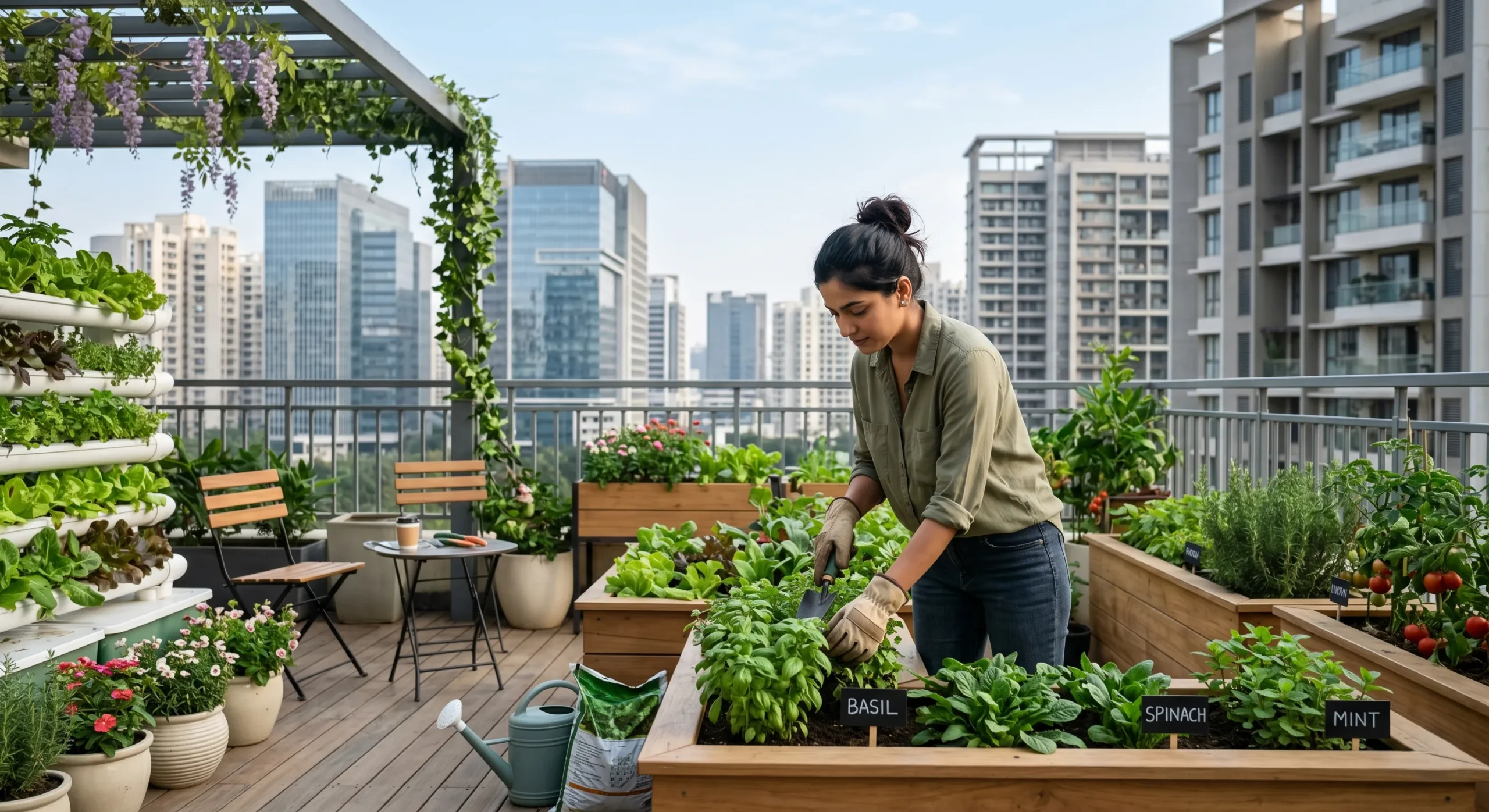

Introduction: Farming is Moving to the City
Imagine fresh vegetables grown just a few steps from your home no long transport, no storage delays, just clean, local food.
This is no longer a future concept. It is already happening.
Urban farming is reshaping how we grow and consume food. As cities expand and farmland shrinks, this approach offers a practical and sustainable solution. From rooftops to balconies, urban spaces are becoming productive green zones.
In this article, we explore why urban farming is the future of sustainable agriculture and how innovative platforms like Krushikala are leading this transformation.
What is Urban Farming?
Urban farming refers to the practice of growing food within cities using available spaces such as:
- Rooftops
- Balconies
- Backyards
- Indoor vertical farms
- Community gardens
It combines traditional agriculture with modern technology to produce food efficiently in limited spaces.
Why Urban Farming Matters for Sustainability
Reduces Food Miles
Food often travels long distances before reaching consumers. Urban farming minimizes this gap.
- Lower transportation emissions
- Fresher produce
- Reduced fuel consumption
Improves Food Security
Urban farming strengthens local food systems and reduces dependence on external supply chains.
- Ensures consistent food availability
- Supports self-reliant communities
- Reduces risk during disruptions
Promotes Fresh and Healthy Produce
Urban-grown food is often fresher and more nutritious.
- Harvested at peak freshness
- Often grown with fewer chemicals
- Supports healthier diets
Efficient Use of Space and Resources
Modern farming methods such as vertical farming and hydroponics maximize productivity.
- Uses less water
- Requires minimal land
- Enables year-round farming
Supports Climate Resilience
Urban farming creates localized systems that can adapt to environmental changes.
- Reduces impact of climate disruptions
- Supports sustainable city living
- Encourages eco-friendly practices
The Role of Technology in Urban Farming
Technology plays a key role in making urban farming efficient and scalable.
- IoT-based monitoring systems
- Automated irrigation
- AI-driven crop management
- Controlled indoor environments
These innovations help improve yield and reduce manual effort.
How Krushikala is Transforming Urban Farming
Krushikala is contributing significantly to the growth of urban farming through innovative solutions.
Smart Farming Solutions
Advanced tools that optimize crop growth using data and automation.
User-Friendly Systems
Simple setups designed for beginners and urban households.
Sustainable Practices
Focus on reducing waste and conserving natural resources.
End-to-End Support
Guidance from setup to harvest, making farming accessible to all.
Benefits of Urban Farming for Individuals and Communities
For Individuals:
- Access to fresh and local food
- Reduced grocery costs
- Improved mental well-being
For Communities:
- Greener urban environments
- Local job creation
- Stronger local economies
Common Challenges and How to Overcome Them
Limited Space
Use vertical systems or compact growing setups.
Lack of Knowledge
Leverage guided platforms like Krushikala.
Initial Costs
Start small and expand gradually.
Simple Tips to Start Urban Farming
- Begin with easy crops such as herbs or leafy greens
- Use containers or grow bags
- Ensure adequate sunlight exposure
- Choose quality soil or hydroponic systems
- Monitor water and nutrients regularly
FAQs
What is urban farming?
Urban farming is the practice of growing food within city environments using small or controlled spaces.
Is urban farming sustainable?
Yes, it reduces transportation, saves resources, and supports local ecosystems.
What can I grow in urban farming?
Leafy greens, herbs, tomatoes, and microgreens are ideal for urban setups.
Is urban farming expensive to start?
It can be low-cost if you start small and scale gradually.
How does urban farming help the environment?
It reduces carbon emissions, saves water, and promotes local food production.
Conclusion
Urban farming is becoming a key solution for sustainable living in modern cities. It addresses food security, reduces environmental impact, and promotes healthier lifestyles.
With the support of innovative platforms like Krushikala, starting your own urban farm is more accessible than ever.
Take the first step toward sustainable living by exploring urban farming solutions today.