

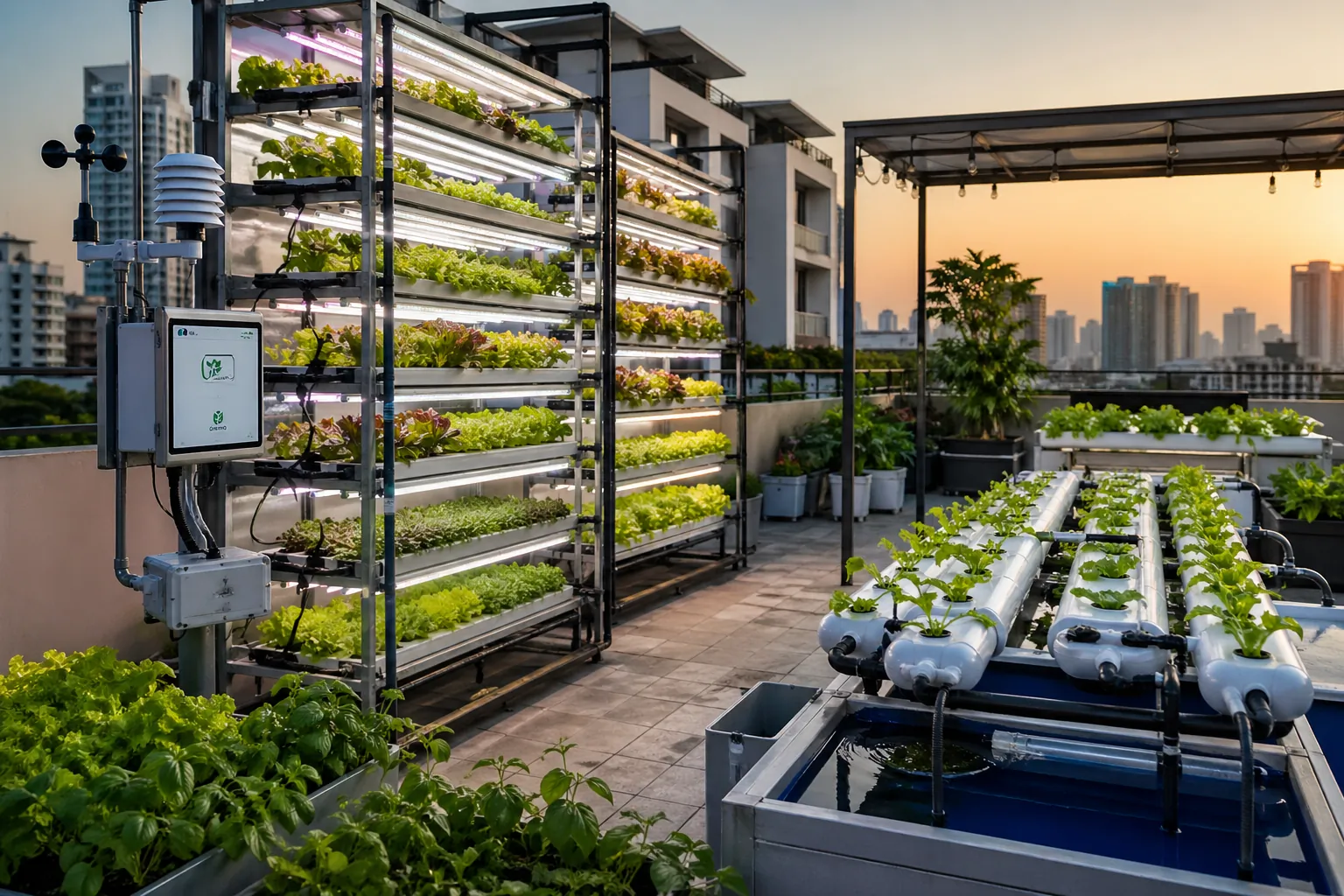

Introduction: Smarter Farming for Modern Cities
Urban farming is evolving fast but what’s really driving this change is technology.
The Internet of Things (IoT) is turning traditional growing methods into smart, data-driven systems. Today, farmers can monitor plants, control watering, and optimize growth conditions all from a smartphone.
This shift is making urban farming more efficient, scalable, and beginner-friendly. In this blog, we’ll explore how IoT is revolutionizing urban agriculture and how Krushikala is leading this innovation.
What is IoT in Urban Farming?
IoT (Internet of Things) refers to a network of connected devices that collect and share data in real time.
In urban farming, IoT connects tools like:
- Soil moisture sensors
- Temperature and humidity monitors
- Automated irrigation systems
- Nutrient tracking devices
These devices work together to create a smart farming ecosystem.
How IoT is Transforming Urban Farming
1. Real-Time Monitoring of Plant Health
IoT sensors continuously track environmental conditions such as:
- Soil moisture
- Temperature
- Humidity
- Light levels
Farmers receive instant updates, helping them make informed decisions quickly.
2. Automated Irrigation Systems
One of the biggest advantages of IoT is automation.
- Water is supplied only when needed
- Prevents overwatering and underwatering
- Saves water and reduces manual effort
This is especially useful for busy urban lifestyles.
3. Smart Nutrient Management
IoT systems can monitor nutrient levels in soil or water.
- Ensures plants get the right nutrients
- Improves crop quality and yield
- Reduces waste of fertilizers
This leads to healthier and more consistent produce.
4. Data-Driven Farming Decisions
IoT collects valuable data over time.
- Tracks plant growth patterns
- Identifies issues early
- Helps optimize farming strategies
This makes urban farming more predictable and efficient.
5. Remote Access and Control
With IoT, farmers don’t need to be physically present.
- Monitor farms via mobile apps
- Control systems from anywhere
- Receive alerts and notifications
This makes farming more accessible for beginners and professionals alike.
Benefits of IoT in Urban Farming
Increased Efficiency
Automation reduces manual work and improves productivity.
Resource Optimization
Water, nutrients, and energy are used more efficiently.
Higher Yields
Controlled environments lead to better crop output.
Reduced Risk
Early detection of issues prevents crop loss.
Scalability
Easy to expand from small setups to larger systems.
How Krushikala is Leading IoT-Driven Urban Farming
Krushikala is at the forefront of integrating IoT into urban farming solutions.
Smart Farming Systems
Krushikala uses IoT-enabled devices to monitor and control farming conditions in real time.
Automated Growing Solutions
From irrigation to nutrient delivery, systems are designed for minimal manual intervention.
User-Friendly Technology
Even beginners can manage their farms through simple dashboards and mobile apps.
Data Insights for Better Results
Farmers get actionable insights to improve crop health and yield.
Practical Tips for Using IoT in Urban Farming
- Start with basic sensors like soil moisture monitors
- Use automated irrigation systems for consistency
- Monitor data regularly to understand plant needs
- Choose scalable systems for future expansion
- Combine IoT with sustainable practices
Common Challenges (and Solutions)
High Initial Cost
Start with essential devices and upgrade gradually.
Technical Complexity
Use beginner-friendly platforms like Krushikala.
Data Overload
Focus on key metrics like moisture, temperature, and nutrients.
FAQs
1. What is IoT in urban farming?
It refers to using connected devices to monitor and manage farming conditions in real time.
2. How does IoT help plants grow better?
It provides optimal conditions by controlling water, nutrients, and environment based on real-time data.
3. Is IoT-based farming expensive?
Initial costs can be higher, but it saves money over time through efficiency and better yields.
4. Can beginners use IoT in farming?
Yes, many systems are designed to be user-friendly and easy to manage.
5. What devices are used in IoT farming?
Common devices include sensors, automated irrigation systems, and monitoring apps.
Conclusion
IoT is redefining urban farming by making it smarter, more efficient, and highly accessible. With real-time monitoring, automation, and data-driven insights, growing food in cities is no longer a challenge.
Innovative platforms like Krushikala are making this technology easy to adopt for everyone from beginners to experienced growers.
Now is the perfect time to embrace smart farming and transform the way you grow food.