

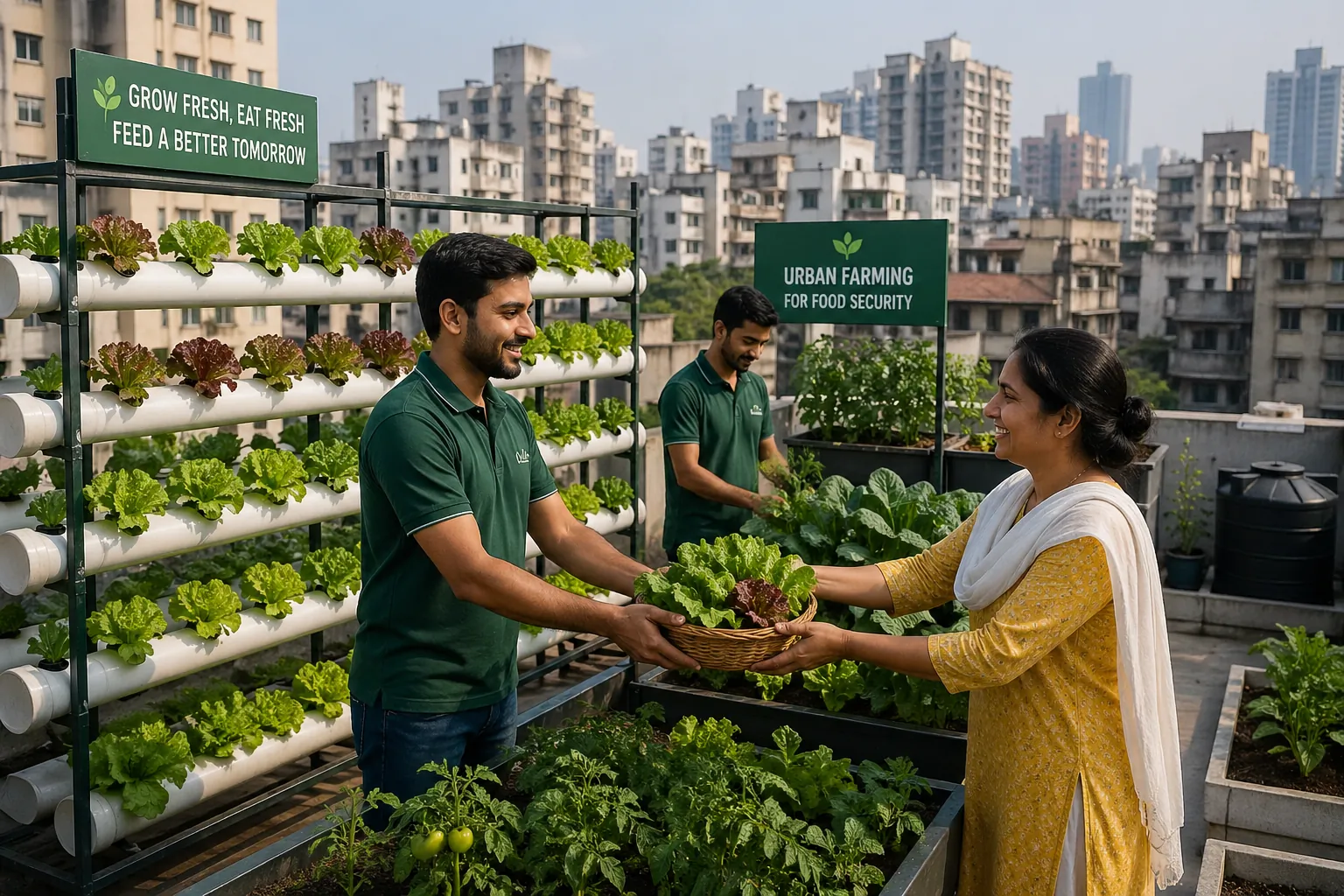

Introduction: A Growing Concern in Modern Cities
Food security is becoming a serious concern, especially in rapidly growing urban areas.
Cities depend heavily on food transported from distant rural regions. Any disruption—whether due to climate change, transportation issues, or rising costs can impact availability and prices.
Urban farming offers a practical and sustainable solution. By growing food within cities, communities can reduce dependence on long supply chains and ensure access to fresh, nutritious produce.
In this article, we explore how urban farming helps combat food security challenges and how Krushikala is contributing to this transformation.
What is Food Security?
Food security means having consistent access to sufficient, safe, and nutritious food.
It depends on three key factors:
- Availability of food
- Accessibility and affordability
- Quality and nutritional value
Urban areas often struggle with maintaining all three, especially during disruptions.
Why Food Security is a Challenge in Urban Areas
Dependence on Long Supply Chains
Most cities rely on food transported over long distances.
- Delays can affect availability
- Transportation increases costs
- Freshness is often compromised
Rising Population and Demand
Urban populations are increasing rapidly, putting pressure on food systems.
- Higher demand for fresh produce
- Limited space for traditional farming
Price Fluctuations
Supply disruptions can lead to sudden price increases, making food less affordable for many households.
How Urban Farming Addresses Food Security
1. Local Food Production
Urban farming brings food production closer to consumers.
- Reduces dependence on external supply
- Ensures steady availability of fresh produce
- Strengthens local food systems
2. Reduced Food Miles
Shorter distances between farm and plate offer several benefits:
- Lower transportation costs
- Reduced carbon emissions
- Fresher, more nutritious food
3. Improved Accessibility
Urban farming makes food more accessible within communities.
- Rooftop gardens and community farms
- Home-based food production
- Increased availability in local neighborhoods
4. Reliable Supply During Disruptions
Local farming systems are less affected by global or regional disruptions.
- Maintains supply during emergencies
- Reduces risk of shortages
5. Encourages Self-Sufficiency
Urban farming empowers individuals and communities.
- Grow your own food
- Reduce reliance on markets
- Build resilience
The Role of Technology in Urban Food Security
Modern urban farming is supported by advanced technology.
- IoT-based monitoring systems
- Automated irrigation
- Controlled environment farming
- Hydroponics and vertical farming
These tools help maximize production even in small spaces.
How Krushikala Supports Urban Food Security
Krushikala is helping build stronger, more reliable urban food systems through innovative solutions.
Smart Urban Farming Systems
Designed to optimize production in limited spaces using technology.
Local Food Production Support
Encourages individuals and communities to grow their own food.
Efficient Resource Management
Systems that reduce water use and improve crop yield.
Accessible for Beginners
Simple, user-friendly solutions make urban farming easy to adopt.
Benefits of Urban Farming for Food Security
Nutritional Benefits
Access to fresh, chemical-free vegetables improves overall health.
Economic Benefits
Reduces grocery expenses and creates local income opportunities.
Environmental Benefits
Lower emissions and sustainable use of resources.
Practical Steps to Start Urban Farming
- Start with small crops like herbs or leafy greens
- Use available spaces like balconies or rooftops
- Choose efficient methods like container gardening or hydroponics
- Monitor plant growth regularly
- Expand gradually
Common Challenges and Solutions
Limited Space
Use vertical farming techniques.
Lack of Knowledge
Follow guided systems like Krushikala.
Initial Investment
Start small and scale over time.
FAQs
1. How does urban farming improve food security?
It enables local food production, reducing reliance on long supply chains and ensuring steady access to fresh food.
2. Can urban farming meet the food needs of cities?
While it may not replace traditional farming entirely, it significantly supplements food supply.
3. What crops are best for urban farming?
Leafy greens, herbs, tomatoes, and microgreens are ideal.
4. Is urban farming affordable?
Yes, it can reduce food costs over time and requires minimal investment to start.
5. How does technology support urban farming?
It improves efficiency through automation, monitoring, and optimized resource use.
Conclusion
Urban farming is a powerful solution to food security challenges in modern cities. By enabling local food production, reducing supply chain dependence, and improving access to fresh produce, it creates a more resilient food system.
With innovative support from Krushikala, urban farming is becoming more accessible and effective than ever.
Take the first step toward food security start growing your own food and contribute to a healthier, more sustainable future.