

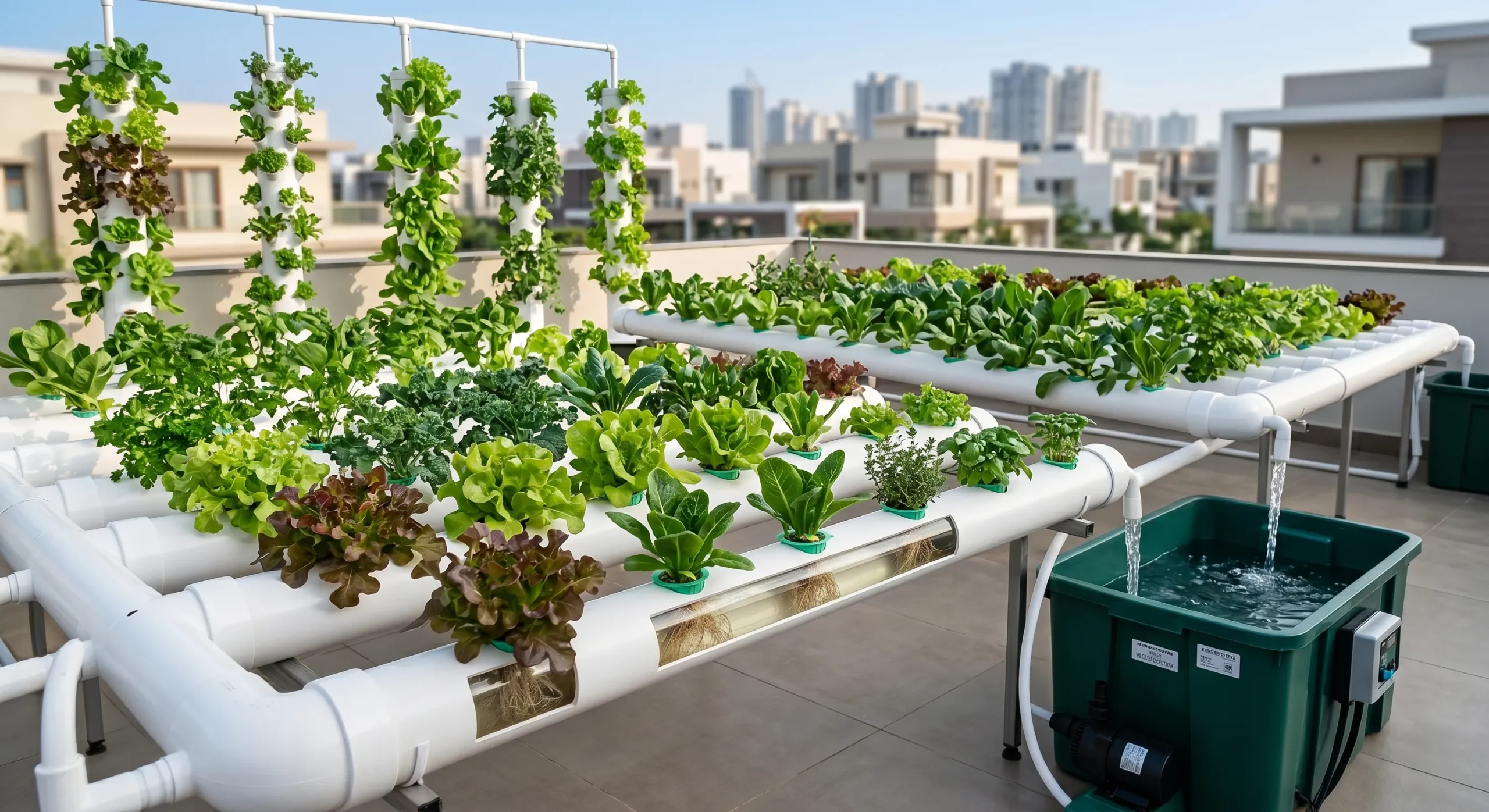

Introduction: Farming Without Soil, A Smarter Way Forward
What if you could grow fresh, healthy food without using soil at all?
It may sound unusual, but soil-less farming is quickly becoming one of the most efficient and sustainable ways to produce food especially in urban environments where space and resources are limited.
With rising demand for fresh produce and increasing environmental concerns, this modern approach is reshaping agriculture. In this article, we explore the benefits of soil-less farming and how Krushikala is making it practical for everyday use.
What is Soil-less Farming?
Soil-less farming is a method of growing plants without soil, using nutrient-rich water solutions instead.
The most common types include:
- Hydroponics – Plants grow in water enriched with nutrients
- Aeroponics – Roots are suspended in air and misted with nutrients
- Aquaponics – Combines fish farming with plant cultivation
These systems provide plants with everything they need to grow without relying on traditional soil.
Why Soil-less Farming is Gaining Popularity
Limited Land Availability
Urban areas often lack fertile land. Soil-less systems can be set up:
- Indoors
- On rooftops
- In small apartments
Need for Sustainable Solutions
Traditional farming uses large amounts of water and land. Soil-less farming offers a more efficient alternative.
Key Benefits of Soil-less Farming
1. Uses Significantly Less Water
Water is recycled within the system.
- Up to 80–90% less water usage compared to traditional farming
- Minimal wastage
- Ideal for water-scarce regions
2. Higher Crop Yields
Plants grow faster in controlled environments.
- Direct nutrient delivery improves growth
- Consistent conditions increase productivity
- Multiple harvest cycles possible
3. No Soil, No Soil-Borne Diseases
Without soil, many common plant diseases are eliminated.
- Reduced risk of infections
- Lower need for chemical treatments
- Healthier plants overall
4. Space Efficiency
Perfect for urban farming.
- Vertical farming setups maximize space
- Suitable for small homes and apartments
- Scalable from small to large systems
5. Cleaner and Chemical-Free Production
Soil-less systems are easier to manage without chemicals.
- Controlled environment reduces pest issues
- Supports pesticide-free farming
- Produces safer, cleaner food
6. Year-Round Farming
Weather conditions have minimal impact.
- Indoor systems allow controlled environments
- Continuous production throughout the year
- Stable supply of fresh produce
Soil-less Farming vs Traditional Farming
| Feature | Soil-less Farming | Traditional Farming |
|---|---|---|
| Water Usage | Low | High |
| Space Requirement | Minimal | Large |
| Crop Yield | High | Moderate |
| Pest Control | Easier | Challenging |
| Dependency on Weather | Low | High |
How Krushikala is Leading Soil-less Farming Innovation
Krushikala is making soil-less farming accessible and efficient through advanced solutions.
Smart Hydroponic Systems
Designed to optimize plant growth with precise nutrient delivery.
Compact Urban Farming Solutions
Ideal for homes, balconies, and small spaces.
Technology-Driven Approach
IoT-based monitoring ensures proper control of water, nutrients, and environment.
Sustainable Farming Practices
Focus on reducing water use and eliminating harmful chemicals.
Practical Tips for Beginners
- Start with a small hydroponic system
- Choose easy crops like lettuce or herbs
- Monitor nutrient levels regularly
- Maintain clean water systems
- Ensure proper lighting for indoor setups
Common Mistakes to Avoid
- Ignoring pH and nutrient balance
- Using poor-quality water
- Overcrowding plants
- Lack of regular monitoring
- Skipping system maintenance
FAQs
1. What is soil-less farming?
It is a method of growing plants without soil using nutrient-rich water or mist systems.
2. Is hydroponics better than traditional farming?
It can be more efficient in terms of water use, space, and yield, especially in urban areas.
3. What crops grow well in soil-less systems?
Leafy greens, herbs, tomatoes, and strawberries grow very well.
4. Is soil-less farming expensive?
Initial setup may cost more, but it saves resources and increases yield over time.
5. Can beginners try soil-less farming at home?
Yes, many simple systems are available for beginners.
Conclusion
Soil-less farming is not just an innovation it is a practical solution for the future of agriculture. It addresses challenges like limited space, water scarcity, and the need for cleaner food production.
With the support of advanced solutions from Krushikala, adopting soil-less farming has become easier than ever.
Take the first step toward smarter farming and experience the benefits of growing food in a cleaner, more efficient way.