

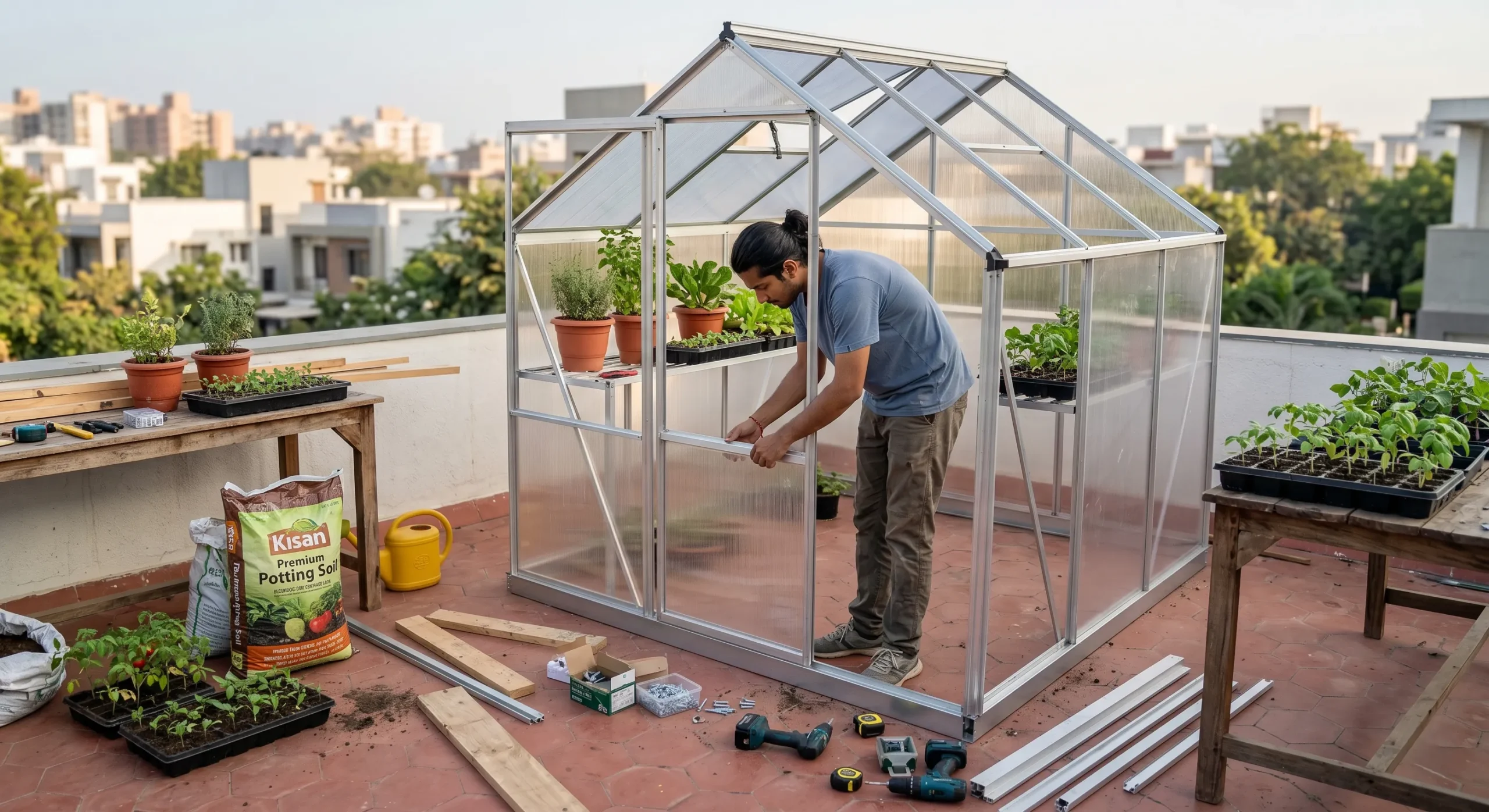

Introduction: Grow Fresh Food, Anytime
Imagine harvesting fresh vegetables regardless of the season right from your home.
A greenhouse makes this possible. It creates a controlled environment where plants can thrive without depending entirely on outdoor conditions.
The good news? You don’t need a large farm or complex setup. Even a small urban space can support a productive greenhouse.
This guide will walk you through everything you need to know to build your own greenhouse, along with how Krushikala makes the process simple and efficient.
What is a Greenhouse?
A greenhouse is a structure made of transparent materials like glass or plastic that allows sunlight to enter while trapping heat inside.
This controlled environment helps:
- Maintain consistent temperature
- Protect plants from harsh weather
- Extend growing seasons
- Improve plant growth and yield
Types of Greenhouses
Choosing the right type is the first step.
1. Lean-To Greenhouse
Built against an existing wall, ideal for small spaces.
2. Freestanding Greenhouse
A standalone structure offering more flexibility and space.
3. Mini or Portable Greenhouse
Perfect for balconies, terraces, or beginners with limited space.
4. Tunnel Greenhouse (Polyhouse)
Made with flexible plastic sheets, commonly used for larger setups.
Materials You Will Need
Before you begin, gather the essentials:
Structure Materials
- PVC pipes, wood, or metal frames
Covering Material
- Polyethylene sheets or greenhouse plastic
- Glass panels (for advanced setups)
Flooring
- Soil beds, containers, or raised beds
Ventilation System
- Windows, vents, or small fans
Watering System
- Drip irrigation or manual watering tools
Step-by-Step Guide to Setting Up Your Greenhouse
Step 1: Choose the Right Location
Select a spot that:
- Gets 5–7 hours of sunlight daily
- Has good drainage
- Is protected from strong winds
Step 2: Decide the Size and Type
Consider:
- Available space
- Types of crops you want to grow
- Budget
Start small if you are a beginner.
Step 3: Build the Frame
- Use sturdy materials like PVC or metal
- Ensure proper height for plant growth
- Secure the structure firmly
Step 4: Install the Covering
- Use transparent plastic or glass
- Ensure it is tightly fixed
- Avoid gaps to maintain temperature
Step 5: Set Up Ventilation
Good airflow is essential.
- Add vents or windows
- Use small fans if needed
- Prevent overheating inside
Step 6: Arrange Growing Space
- Use pots, grow bags, or raised beds
- Plan spacing for different plants
- Keep pathways for easy access
Step 7: Install Watering System
- Use drip irrigation for efficiency
- Ensure even water distribution
- Avoid overwatering
Step 8: Monitor Temperature and Humidity
Maintain ideal conditions for plant growth:
- Use thermometers or sensors
- Adjust ventilation when needed
Best Crops to Grow in a Greenhouse
Start with easy and high-yield plants:
- Leafy greens (spinach, lettuce)
- Herbs (mint, basil, coriander)
- Tomatoes
- Cucumbers
- Peppers
Common Mistakes to Avoid
- Poor ventilation leading to overheating
- Overwatering plants
- Choosing the wrong location
- Starting with too many crops
- Ignoring pest control
How Krushikala Simplifies Greenhouse Setup
Setting up a greenhouse can feel complex, but Krushikala makes it much easier with tailored solutions.
Customized Greenhouse Solutions
Designed for both small urban spaces and larger setups.
Smart Farming Integration
IoT-based systems help monitor temperature, humidity, and watering.
Beginner-Friendly Guidance
Step-by-step support from planning to harvest.
Efficient and Sustainable Systems
Focus on water conservation and eco-friendly practices.
Practical Tips for Beginners
- Start with a small greenhouse
- Choose easy-to-grow plants
- Maintain proper airflow
- Monitor plants daily
- Upgrade gradually as you gain experience
FAQs
1. How much does it cost to set up a greenhouse?
Costs vary based on size and materials, but small setups can be started with a modest budget.
2. Can I build a greenhouse at home?
Yes, even small spaces like terraces or balconies can support a greenhouse.
3. What is the best material for a greenhouse?
Polyethylene sheets are affordable and effective for beginners.
4. Do greenhouses require a lot of maintenance?
Regular monitoring of temperature, water, and pests is needed but manageable.
5. Is a greenhouse suitable for all climates?
Yes, greenhouses help control environmental conditions, making them suitable for various climates.
Conclusion
Setting up your own greenhouse is a practical step toward growing fresh, healthy food year-round. With the right planning, materials, and approach, even beginners can succeed.
Solutions from Krushikala make greenhouse farming more accessible, efficient, and sustainable.
Start small, learn as you grow, and take control of your food production today.